Quick Verdict
If you’re short on time: choose the Garmin vívoactive 5 if you want long battery life, compatibility with any phone, and don’t want to spend $400+. Choose the Apple Watch Series 11 if you’re an iPhone owner who wants a full smartwatch calls, texts, apps and deeper health monitoring and don’t mind charging nightly. Neither watch is “better” outright; the right pick depends more on the phone in your pocket than on the spec sheet.
Pick the vívoactive 5 if you…
- Use an Android phone, or want flexibility to switch later
- Want a week or more between charges
- Care more about workout and sleep tracking than messaging
- Want to spend closer to $300 than $400
Pick the vívoactive 5 if you…
- Own an iPhone and want deep integration with it
- Want calls, texts and apps right on your wrist
- Value ECG, hypertension alerts and deeper health data
- Don’t mind a nightly charging routine
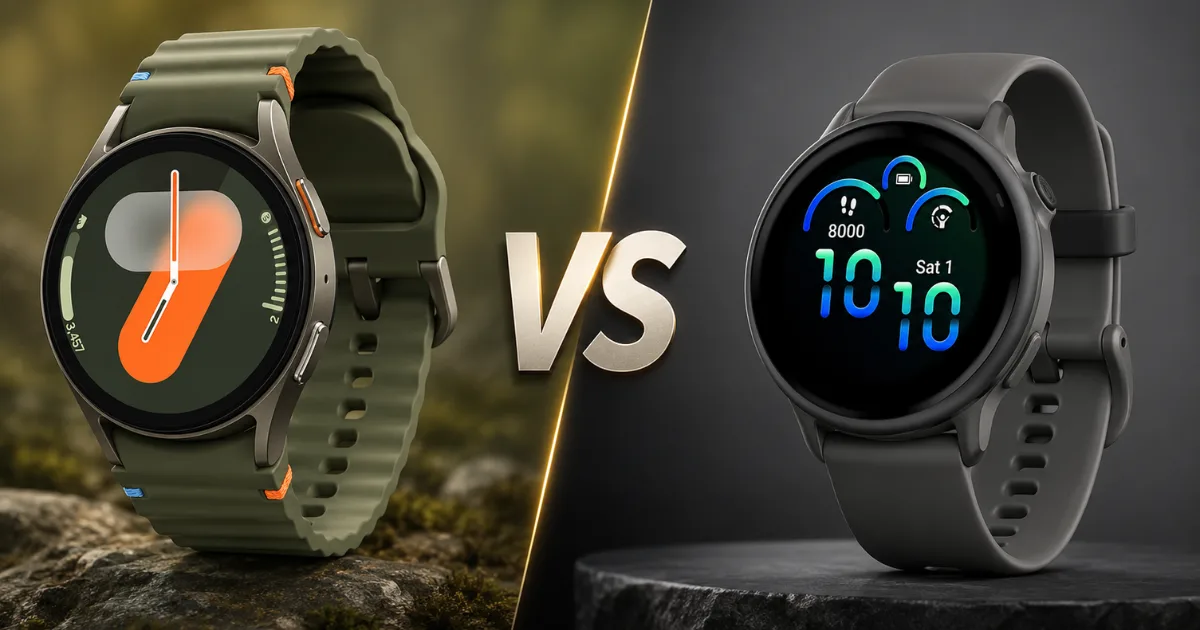
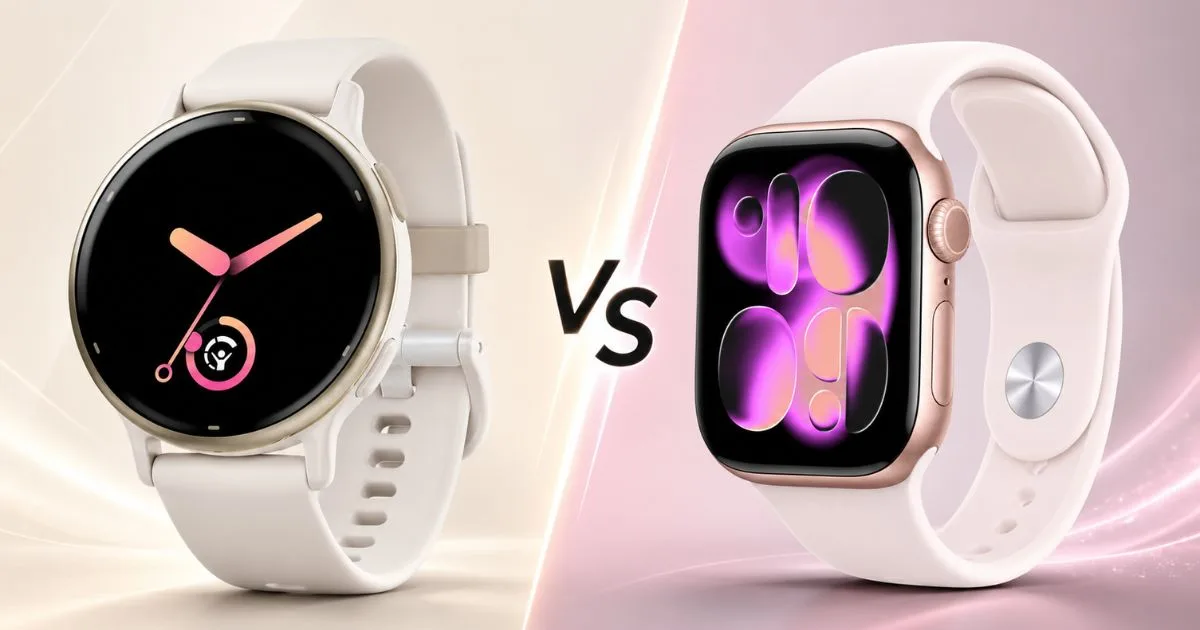
Garmin vívoactive vs Apple Watch is a common match-up for anyone shopping for a fitness-first smartwatch. Both track workouts and sleep well and look good on the wrist the real differences show up once you’re wearing one every day.
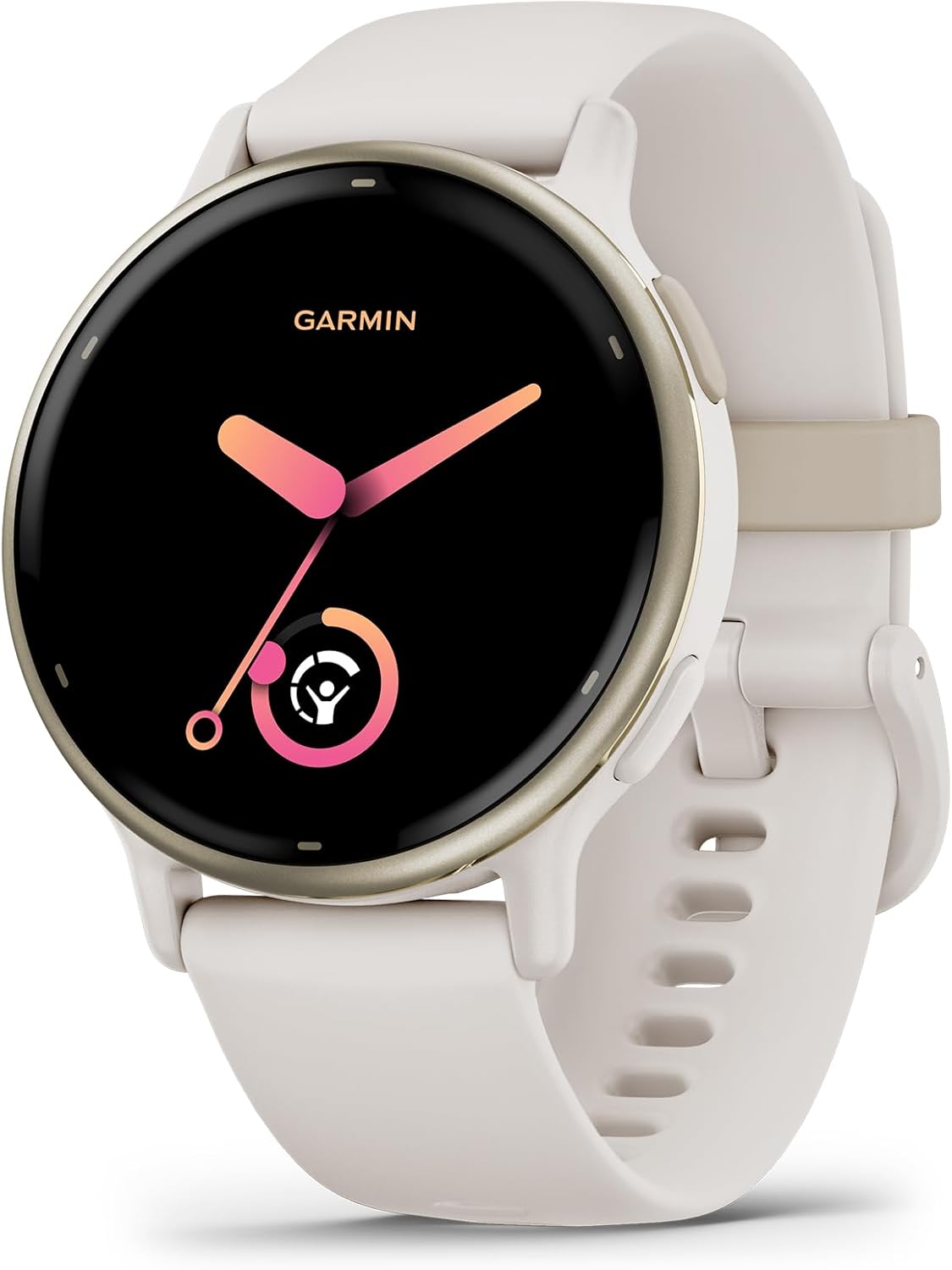
Garmin vívoactive 5
Starting price · frequently discounted
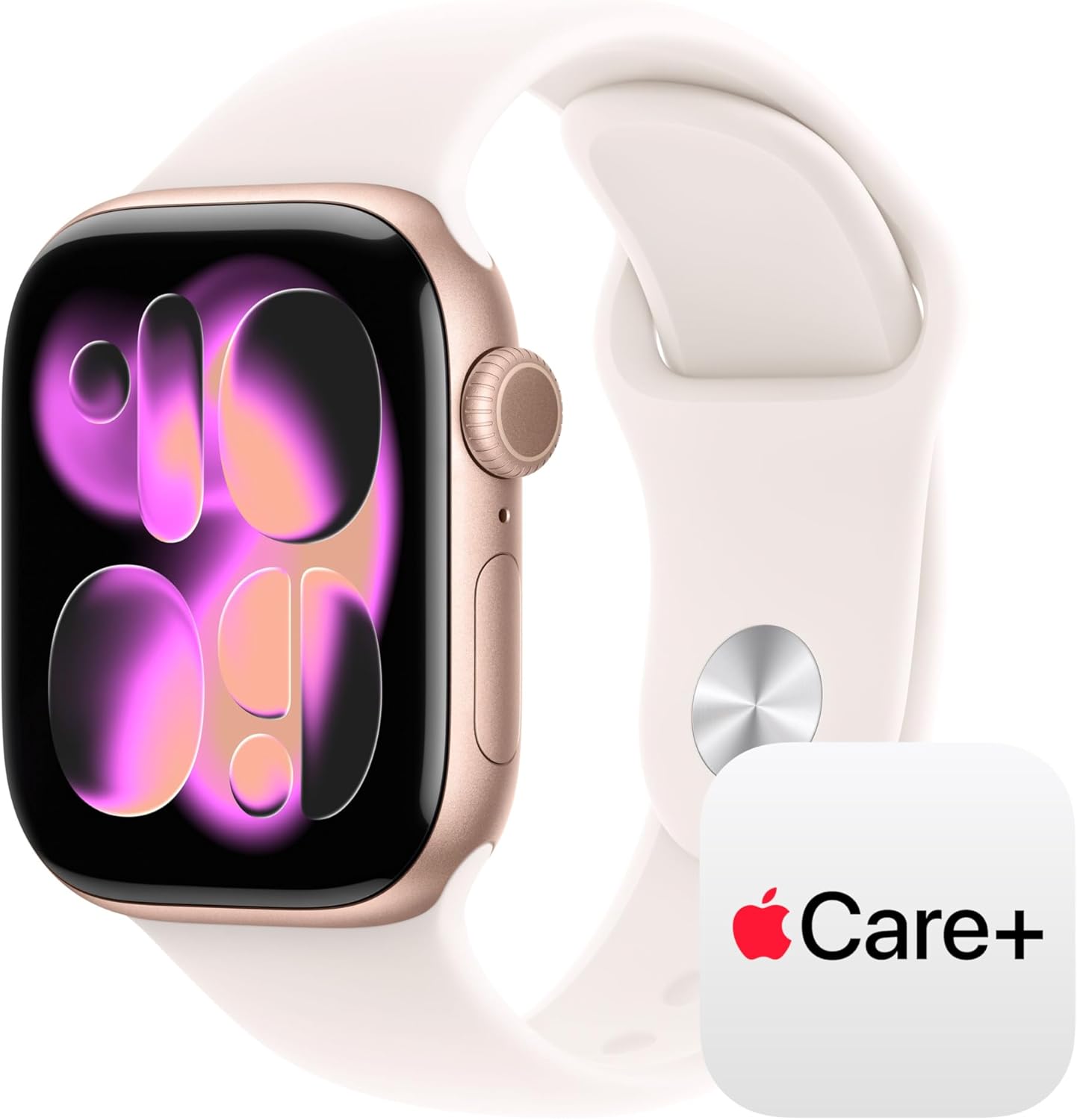
Apple Watch Series 11
42mm, GPS, aluminum
Key Differences Between Garmin vívoactive 5 and Apple Watch Series 11
Both watches nail the fundamentals heart rate, sleep, blood oxygen, GPS workouts. In practical terms, four differences do most of the work in deciding which one you’ll actually be happy wearing.
Phone Compatibility
This decides things for most buyers before anything else does. The vívoactive 5 pairs with iOS and Android with almost no missing features. Series 11 only works with an iPhone, full stop. If you’re on Android, Garmin is your only real option here; if you’re on iPhone, you can choose either, though Apple’s own watch integrates more deeply.
Battery Life
Garmin rates the vívoactive 5 at up to 11 days in smartwatch mode. Apple rates Series 11 at up to 24 hours of typical use, or up to 38 hours in Low Power Mode. In everyday use, that means Garmin owners charge on their own schedule, while Apple Watch owners build a nightly habit into their routine something worth knowing if you also want overnight sleep tracking.
Health & Safety Monitoring
Apple has pulled ahead for anyone who wants medical-style monitoring. Series 11 adds hypertension notifications alongside its ECG app, irregular rhythm alerts and sleep apnea notifications. The vívoactive 5 skips ECG and focuses on daily coaching instead Body Battery, HRV status and sleep coaching with nap detection. This makes more sense for buyers who want to understand daily patterns rather than screen for a specific condition.
Design, Sizing & Materials
The vívoactive 5 ships in one 42mm case at roughly 23 grams light enough to forget you’re wearing it. Series 11 comes in two sizes and two materials, aluminum from $399 or titanium from $699, so you can size it to your wrist and pick a finish. The trade-off is weight: even the smaller aluminum Series 11 is noticeably heavier, and price climbs fast from there.
Garmin vívoactive 5 vs Apple Watch Series 11: Comparison Table
The table below lines up the specs that actually affect daily use. Where one watch has a clear, factual edge, that value is bolded in its column.
| Feature | Garmin vívoactive 5 | Apple Watch Series 11 |
|---|---|---|
| Case sizes | 42mm (one size) | 42mm or 46mm |
| Weight | ~23g | 29.7g–43.1g (size/material) |
| Display | 1.2″ AMOLED, optional always-on | Always-on OLED, up to 2,000 nits |
| Battery life | Up to 11 days (smartwatch mode) | Up to 24 hrs (38 hrs low power) |
| Water resistance | 5 ATM | 50 meters |
| Built-in GPS | Yes | Yes |
| Phone compatibility | iOS & Android | iPhone only |
| Cellular (5G) option | Not available | Yes, extra cost |
| ECG app | Not available | Yes |
| Blood oxygen (SpO2) | Yes | Yes |
| Hypertension alerts | Not available | Yes |
| Sleep tracking | Sleep coaching + nap detection | Sleep score + apnea alerts |
| Calls & texts on wrist | Notifications; replies need Android | Full calls, texts, Siri |
| Onboard music storage | 4GB, offline streaming | Needs cellular plan or synced iPhone |
| Contactless payments | Garmin Pay | Apple Pay |
Design and Build Quality
Pick either watch up and the size difference is the first thing you’ll notice. At about 23 grams, the vívoactive 5 is genuinely light the kind of watch you forget you’re wearing mid-run or overnight while it tracks your sleep. Garmin ships it in a single 42mm case with an anodized aluminum bezel and a silicone band, available in a handful of colors, so there isn’t much to decide beyond which one you like.
Apple takes the opposite approach. Series 11 comes in two case sizes, so smaller and larger wrists both get a proper fit, plus two materials aluminum from $399, or titanium from $699 for a more premium feel. The wide-angle always-on display is one of the better screens in the category, staying readable at odd angles and in direct sun, and Apple says the cover glass is twice as scratch-resistant as the previous generation’s.
The trade-off is weight. Even the smaller 42mm Series 11 comes in around 30 grams in aluminum, climbing past 43 grams in titanium noticeably heavier than the Garmin, and easy to feel by the end of a long day. Neither watch is uncomfortable, but if all-day, barely-there wearability matters most to you, the vívoactive 5 has a real advantage that most buyers underestimate until they’ve worn both.
Performance and Features
Fitness and Health Tracking
Both watches cover the fundamentals well: continuous heart rate, blood oxygen, sleep stages, steps and GPS-tracked workouts. Where they diverge is depth and framing. Garmin leans into training load and recovery. Body Battery turns sleep, stress and activity into a simple daily energy score, HRV status adds recovery context, and sleep coaching includes nap detection, useful if your schedule doesn’t fit a tidy eight-hour block. With 30-plus sport profiles, including modes for wheelchair users, and Garmin Coach training plans, the vívoactive 5 covers most casual-to-intermediate training needs without feeling like a dedicated running watch.
Series 11’s fitness tools are solid rather than exhaustive training load metrics and Workout Buddy, an AI-generated audio coaching feature, are useful additions. Its real strength sits elsewhere: the ECG app, irregular rhythm notifications and the new hypertension notifications make it closer to a health-monitoring device that also tracks workouts than a training watch that happens to check your health.
Smart Features and Everyday Software
This is where Series 11’s iPhone-only design pays off. Paired with an iPhone, it takes calls, sends texts, runs third-party apps, and uses Siri with on-device processing genuinely useful if you want to leave your phone behind more often. The vívoactive 5 handles notifications well, and on Android it lets you send quick preset replies to texts; on iPhone, Apple’s platform restrictions block message replies from any third-party watch, so you can read and dismiss but not respond worth knowing if you’re an iPhone owner considering Garmin anyway.
Neither watch replaces a phone entirely, but Series 11 comes closer, especially with a cellular plan attached. For buyers who mainly want workout tracking, notifications and a payment method on their wrist, the vívoactive 5 already covers what most people actually use day to day.
Pros and Cons
Garmin vívoactive 5
- Up to 11 days of battery life
- Works with both iOS and Android
- Lightweight, comfortable for 24/7 wear
- Strong sleep & recovery tools (Body Battery, nap detection)
- Lower price, frequently discounted further
- No ECG or hypertension monitoring
- No speaker/mic for on-wrist calls
- Only one case size
- Text replies need an Android phone
Apple Watch Series 11
- ECG, hypertension and sleep apnea alerts
- Full calls, texts and apps on the wrist
- Two case sizes, aluminum or titanium finish
- Bright, best-in-class always-on display
- Deep integration with iPhone and the Apple ecosystem
- iPhone only no Android support at all
- Needs charging roughly every day
- Noticeably heavier than the Garmin
- Price climbs fast with cellular or titanium
Which One Offers Better Value?
Value isn’t just about price it’s about how much of what you’re paying for actually gets used. On sticker price alone, the vívoactive 5 wins clearly: it starts around $100 less than the cheapest Series 11 configuration, often sells for less once discounted, and doesn’t need a data plan to unlock its main features. For anyone who mainly wants workout tracking, sleep insights and notifications, that’s a lot of watch for the money.
Series 11 earns its higher price differently. You’re paying for calls and texts without your phone nearby, an ECG sensor, hypertension notifications, and years of watchOS updates on top of deep iPhone integration. For iPhone owners who’ll actually use those features, that’s real value even above $399.
Final Verdict
There’s no single winner here, and that’s not a cop-out these two watches are built for different phones and different priorities, so the better one depends on what you already own and what you actually want a smartwatch to do.
Choose the Garmin vívoactive 5 if…
You want a comfortable, capable fitness watch that goes well over a week between charges, works with any phone, and doesn’t ask you to spend $400+ to get started. It’s hard to beat for everyday training, sleep tracking and simple daily wear.
Choose the Apple Watch Series 11 if…
You’re already an iPhone owner who wants your watch to function like a genuine extension of your phone calls, texts, apps and increasingly serious health monitoring and you’re fine charging it daily in exchange.
Most buyers already know which camp they’re in the moment they check which phone is in their pocket. Let that decide it, and you won’t go wrong either way.
Frequently Asked Questions
No. Apple Watch Series 11 requires an iPhone (11 or later, running iOS 26) and has no Android support. If you use Android, the Garmin vívoactive 5 is the only one of these two watches you can pair.
Yes, it pairs with both iOS and Android for tracking, notifications and Garmin Connect. The one gap on iPhone is message replies that feature needs Android, so iPhone users can read texts on the watch but not reply from it.
The vívoactive 5, by a wide margin. Garmin rates it at up to 11 days in smartwatch mode, while Apple rates Series 11 at up to 24 hours of typical use.
For most buyers, yes. Garmin’s update is a modest refresh rather than a redesign, and the vívoactive 5 often sells below its original price now, which makes it a strong budget pick in this comparison.
It depends on what you’ll use. For basic fitness tracking and sleep insights, the vívoactive 5 delivers more per dollar. For iPhone owners who want calls, texts, apps and deeper health monitoring on the wrist, Series 11’s higher price is easier to justify.